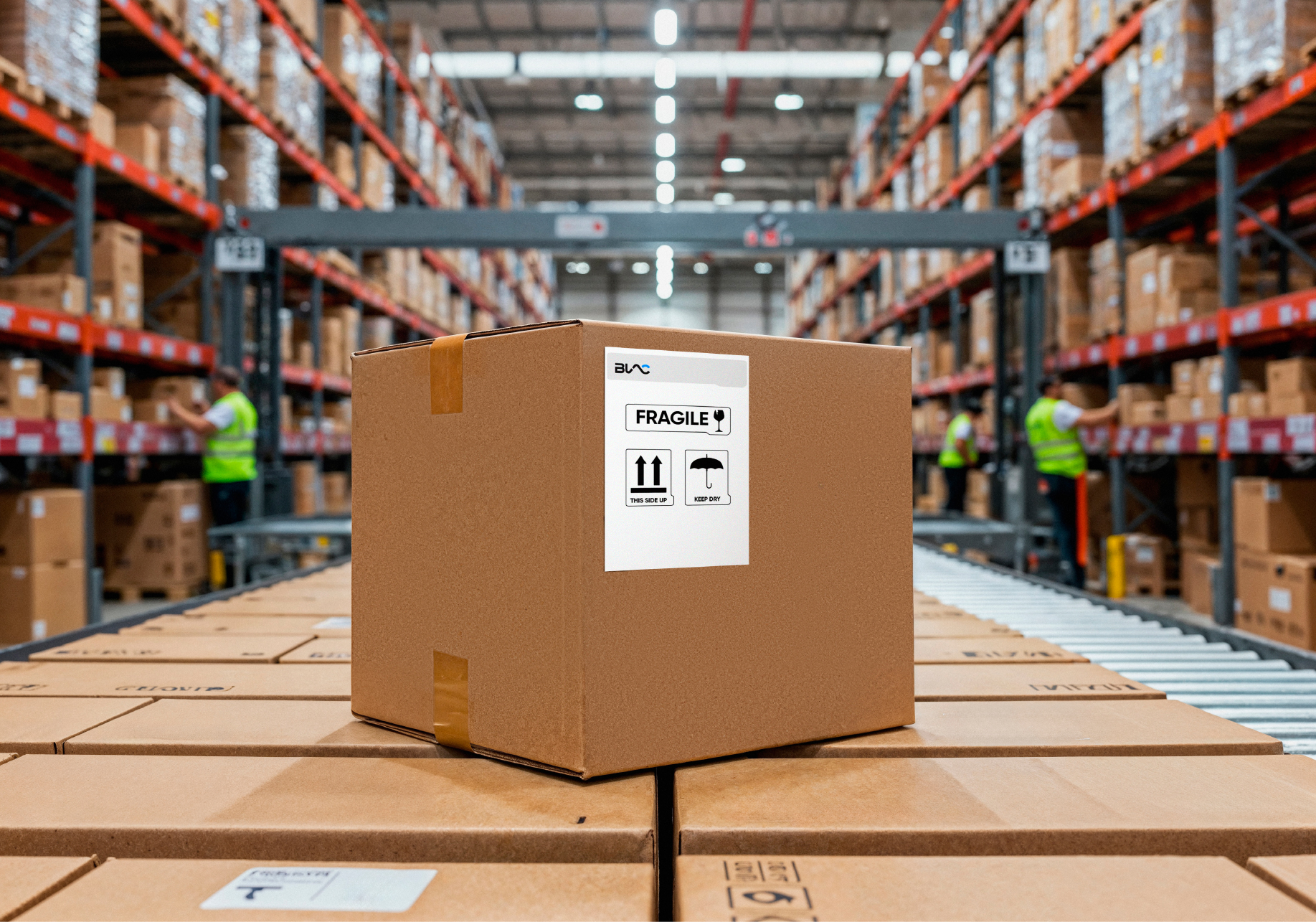

Stickers That Do More Than Mark a Box
A sticker used to mean one thing in logistics: a label to identify a box, route a pallet, or flag special handling. That is no longer enough. In high-value, time-sensitive supply chains, Stickers are starting to serve a different role – not just marking freight, but monitoring it.
For operations teams under pressure to reduce loss, prove compliance, and respond faster to in-transit issues, that shift matters. A passive label cannot tell you if a shipment was exposed to heat, opened without authorization, dropped during transfer, or delivered to the wrong place. A smart sticker can.
Why stickers matter in modern logistics
The value of a sticker in freight has always been simplicity. It is easy to apply, low profile, and scalable across large shipment volumes. That is exactly why the category is becoming more important, not less. When intelligence is built into the same lightweight format, the sticker stops being packaging support and starts becoming an operational control point.
This is especially relevant for shipments where product condition matters as much as arrival. Pharmaceuticals, biologics, food, electronics, and other sensitive cargo can be compromised long before anyone notices. If the only record you have is a barcode scan at origin and destination, you are managing risk with blind spots in between.
Smart stickers close that gap. They combine shipment identification with sensor-based monitoring and connectivity, giving logistics teams direct visibility into where cargo is and what happened to it during transit.
What smart stickers actually do
Not all stickers belong in the same category. A standard shipping label carries static data. A condition indicator may show that a threshold was crossed, but often only after delivery. A connected smart sticker goes further by collecting data during the trip and making it available while the shipment is still moving.
Depending on the device, that can include temperature, humidity, light exposure, vibration, battery status, tamper events, cellular location, GPS position, and Wi-Fi-based tracking support. That combination changes how teams manage freight.
Instead of asking, “Did something go wrong?” after a customer complaint, teams can ask, “What is happening right now, and do we need to intervene?”
That distinction is operationally significant. Real-time or near-real-time visibility supports exception management, not just post-mortem reporting. If a cold chain shipment starts drifting out of range, a team can escalate before product quality is lost. If a tamper event occurs during a handoff, security teams can act while the trail is still fresh. If vibration exposure spikes on a fragile load, downstream inspection can be prioritized before delivery is accepted.
Where stickers fit best
Smart stickers are not the answer for every shipment. That is one of the most important decisions to get right.
For reusable assets, long-haul containers, or high-power tracking needs, a portable or hard-mounted device may be the better fit. Those formats can offer longer battery life, stronger mounting, and expanded sensing options. But when operations need a low-profile, shipment-level device that can scale across cartons, cases, or one-way freight, stickers have a clear advantage.
They work well when ease of deployment matters. Teams do not want a solution that slows packing lines, requires reverse logistics, or creates extra handling steps at destination. A sticker format keeps adoption practical. It can be applied quickly, used once, and tied directly to a shipment record in the visibility platform.
That makes stickers particularly effective for parcel flows, cold chain packaging, trial shipments, premium SKUs, and lanes with recurring claims or theft exposure.
The trade-off: simple form, serious expectations
The appeal of stickers is obvious, but expectations need to stay grounded in the shipment profile.
A sticker-sized device operates under tighter physical constraints than a larger tracker. Battery size, transmission frequency, environmental exposure, and trip duration all affect performance. A short domestic parcel move and a long multimodal international shipment place very different demands on the device.
That is why the sticker itself is only part of the decision. The real question is whether the full system around it supports operational control. Data without alerting creates noise. Alerts without context create confusion. Hardware without reliable connectivity leaves the same blind spots in place, just with more complexity.
This is where an end-to-end approach matters. Devices, connectivity, sensor logic, and platform workflows need to work together so teams can detect potential damage before it reaches the customer, validate handling conditions, and respond with confidence.
Smart Stickers as a control layer
For logistics leaders, the best use of smart stickers is not novelty. It is control.
Control over condition compliance. Control over theft and tamper detection. Control over proof of delivery and chain-of-custody validation. Control over exceptions before they become claims, write-offs, or service failures.
In that sense, stickers are no longer just an accessory to the shipment. They are becoming part of the intelligence layer around it. Blac Smart Sticker and Smart Sticker Pro reflect that shift by turning a familiar format into a real-time source of shipment evidence.
If a shipment is valuable enough to monitor, it is worth asking whether a sticker should only identify the box – or help protect what is inside.