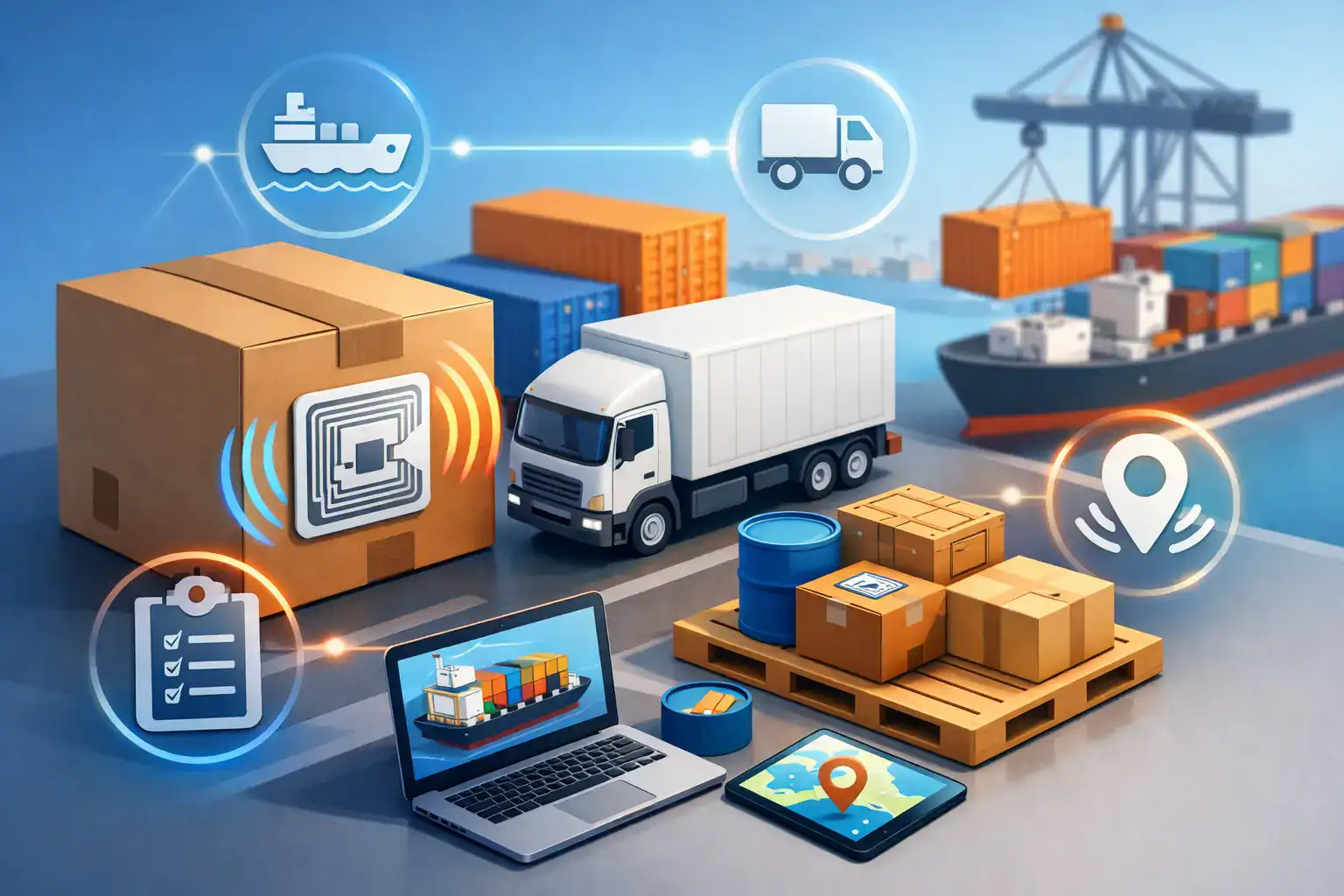
A shipment can look on schedule while its value is already deteriorating. A refrigerated pallet may be exposed to a temperature excursion at a cross-dock. A high-value load may sit outside an approved route. A container door may open without authorization. Freight monitoring gives logistics teams the evidence and alerts needed to act while an incident can still be contained.
For organizations moving pharmaceuticals, perishables, electronics, industrial components, or other sensitive cargo, a proof-of-delivery document is not enough. The question is not simply whether the shipment arrived. The question is whether it arrived in the required condition, through the expected chain of custody, and without an unresolved security event.
Freight Monitoring Is Operational Control
Freight monitoring combines connected devices, sensor data, and a visibility platform to show what is happening to cargo during transit. Depending on the shipment and the device, that can include location, temperature, humidity, light exposure, vibration, battery status, and tamper events.
This is different from basic vehicle tracking. Fleet telematics can show where a truck is, but it may not show whether the cargo inside experienced a damaging condition. Likewise, a carrier milestone may confirm that a load was tendered, departed, or delivered, but it cannot verify whether a pallet was exposed to heat on a loading dock or whether a container was opened mid-route.
Effective monitoring puts the shipment itself at the center of the visibility strategy. It creates a record of cargo condition and movement across road, rail, ocean, and air transportation. That record supports faster intervention during transit and stronger validation after delivery.
What an Effective Freight Monitoring Program Must Reveal
The right data depends on the commodity, route, and risk profile. A temperature-controlled biologic requires different controls than a high-value electronics shipment, and an ocean container creates different blind spots than a same-day domestic truckload. Still, most critical freight programs need visibility across four areas:
- Location and route adherence: Know where cargo is, whether it is moving, and whether it has departed from an approved route or geofence.
- Condition integrity: Track temperature, humidity, light, shock, vibration, and other conditions that may compromise product quality or packaging.
- Security and tamper exposure: Detect unauthorized opening, unexpected stops, or handling events that raise theft and diversion risk.
- Custody and delivery validation: Confirm when cargo reached the intended destination and document its condition at the point of handoff.
A single location ping every few hours may be adequate for low-risk freight. It is rarely enough for cargo that can spoil, be damaged, or be stolen in a short window. Monitoring frequency should match the cost of delay. If an excursion must be addressed within 30 minutes, data arriving four hours later has little operational value.
Alerts Matter More Than Raw Data
A dashboard full of shipment dots does not prevent loss. The value of freight monitoring comes from meaningful exceptions, clear ownership, and a defined response process.
Start with thresholds that reflect real product and operational limits. For cold chain freight, that may mean a temperature range, an acceptable duration outside that range, and a more urgent threshold for severe excursions. For high-value cargo, it may mean alerts for route deviation, extended dwell time, unauthorized door opening, or movement outside approved hours.
Thresholds should not be copied blindly across lanes. A five-minute temperature variation may be normal during a planned transfer between facilities. The same variation could be unacceptable for a shipment left on an uncontrolled dock. Teams need context around the event: the location, duration, shipment stage, commodity requirements, and carrier plan.
Assign an Owner Before an Alert Occurs
Every critical alert needs a response owner and an escalation path. If a shipment leaves a geofence, does the carrier dispatcher call the driver? Does the control tower contact security? If temperature exceeds the warning threshold, who verifies reefer performance and who decides whether the product can continue moving?
Without these decisions in place, alerts become noise. Operations teams lose trust in the system, exceptions go unaddressed, and the organization returns to investigating problems after the fact.
A practical response workflow is direct: detect the event, verify its severity, contact the responsible party, document corrective action, and determine whether the shipment can proceed. The goal is not to create more work. It is to remove the delay between a developing problem and a controlled response.
Design Monitoring Around the Highest-Risk Lanes
Not every shipment requires the same device, reporting interval, or sensor set. Starting with the highest-risk lanes makes the program easier to prove and scale.
Look first at shipments with a history of claims, temperature deviations, theft exposure, delivery disputes, or missed handoffs. Also prioritize lanes where transportation involves multiple carriers, border crossings, cross-docks, long dwell periods, or weak communication from partners. These are the places where conventional status updates tend to leave costly blind spots.
A focused pilot should establish what success looks like before deployment begins. That could mean reducing temperature-related claims, improving on-time delivery verification, shortening exception response time, or identifying repeat dwell locations. The most useful measurement is not the number of devices deployed. It is the number of preventable incidents detected early enough to change the outcome.
Once the workflow is proven, expand by risk category. A company may use disposable smart labels for high-volume, single-use shipments while reserving reusable portable devices for high-value freight or recurring controlled lanes. The correct choice depends on shipment duration, recovery logistics, sensor requirements, and total cost of ownership.
Technology Selection Changes What You Can Prove
Hardware is only one part of the decision. A device that records data but cannot communicate during a critical transit window may document a loss without helping prevent it. Connectivity, platform access, alert configuration, and support processes all determine whether the monitoring program delivers control.
For global freight, cellular, GPS, and Wi-Fi capabilities can each serve a different purpose. GPS supports location awareness outdoors. Cellular connectivity can transmit data in transit where coverage is available. Wi-Fi can add location context and support reporting in facilities. No single signal is perfect in every environment, particularly inside warehouses, aircraft, metal containers, or remote transport corridors. The strongest approach uses the appropriate connectivity model for the lane and accepts that coverage conditions must be planned for rather than assumed away.
Battery performance is another operational trade-off. More frequent reporting provides faster awareness but consumes more power. Longer battery life may require lower reporting frequency or a different device class. The right setting is the one that protects the shipment through its full journey, including potential delays, without producing unnecessary data volume.
Teams should also consider how sensor data will be used after delivery. Quality assurance may need an auditable condition history. Customer service may need fast proof when a receiver disputes a delivery. Security teams may need a timeline of movement and tamper events. A monitoring platform should make this information accessible to the people responsible for acting on it, not lock it inside a technical report.
Blac approaches this as an end-to-end control system: connected smart labels and portable devices, global connectivity, real-time sensing, and a platform built for exception management. That combination matters because device data only becomes valuable when it reaches the right team in time to support a decision.
Turn Shipment Intelligence Into Better Operating Standards
The long-term benefit of monitoring is not limited to individual rescues. Repeated shipment data reveals patterns that carrier scorecards and delivery milestones often miss.
If a particular lane repeatedly produces vibration events, packaging standards may need review. If temperature alerts concentrate at one handoff location, the issue may be facility handling rather than reefer performance. If unauthorized stops recur on a specific route, security protocols and carrier instructions may need to change. These findings turn monitoring from a reactive tool into a source of measurable process improvement.
The data can also strengthen commercial and compliance conversations. Instead of debating whether a shipment may have been mishandled, teams can review time-stamped evidence. That clarity helps resolve claims, validate service performance, and protect customer relationships when the shipment outcome is under scrutiny.
Control begins before freight leaves the dock. Define what normal looks like for each critical shipment, decide what conditions require intervention, and make sure the right people can see and act on the exception. When cargo is visible in motion, risk becomes something your team can manage rather than explain later.